Your shopping cart is empty.
There was an error retrieving your cart. Please try again later.

Tennant Robotics Regulatory Update
Customer Confidence. Trusted Innovation. Long-Term Support.
In a Public Notice dated July 28, 2026, the FCC added certain foreign-made robots to a list of products that could pose security risks. Because of this, some new foreign-made robots may no longer be approved for sale in the United States.
However, this does not affect robots that were already approved and sold in the U.S. prior to the date of the FCC’s Public Notice. Customers can continue using those products as they do today.
Yes. The FCC specifically included advanced robotic devices within the scope of this action. AMRs are among the types of products that may be covered when they include autonomous navigation, sensors, network connectivity, software, and remote operation capabilities.
No. Existing foreign-produced robot models that were properly authorized by the FCC before the July 28 action can generally continue to be sold and used.
The bigger issue is new models entering the U.S. market going forward. New foreign-produced advanced robotic devices generally cannot receive new FCC equipment authorization without “Conditional Approval” granted by the U.S. Department of War.
Yes. There is no interruption to the sale or deployment of Tennant’s current robotic products. Our customers can continue moving forward with Tennant robotic deployments.
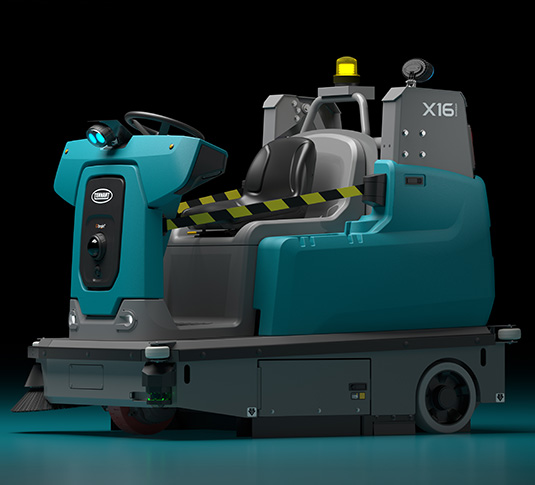
Yes. Tennant robotic solutions meet applicable FCC requirements and can be marketed and sold in the United States. Tennant is committed to complying with all applicable regulatory requirements and maintaining high standards for product security, reliability, and performance.
Tennant is well positioned to continue serving customers as a trusted robotics provider.
Yes. Tennant can provide FCC authorization documentation for applicable robotic products upon request. Customers should ask all robotics suppliers to provide equivalent documentation for the exact model being proposed.
Yes. Tennant robots will continue to receive software and cybersecurity updates to support ongoing performance, functionality, and security. The FCC's recent action does not affect Tennant's ability to provide updates, enhancements, or customer support for its robotic solutions.
Yes. The FCC has stated that consumers and organizations can continue using advanced robotic devices they purchased or rented prior to July 28. In any event, existing device models that were FCC authorized prior to July 28 are not affected by this update and can continue to be used.
This is where the FCC action may become particularly significant. New foreign-produced advanced robotic device models are generally prohibited from obtaining new FCC equipment authorization unless they receive Conditional Approval from the Department of War. As such, a company being able to sell an existing authorized model does not mean it can launch its next-generation model in the United States.
The ruling also requires that in the absence of a Conditional Approval, products must be manufactured in the U.S. and the cost of domestic components must exceed 65% of the manufacturer’s component costs (in each case, as determined pursuant to the Buy American Act) through December 31, 2028, increasing to 75% on January 1, 2029. Qualification depends strictly on where components are manufactured and their cost share, not the brand or company's home.
Yes, generally. The FCC specifically provided relief allowing previously authorized advanced robotic devices to continue receiving qualifying software and firmware updates, including security and functionality updates, through at least January 1, 2029.
No. How long a product has been sold in the United States is not by itself evidence of FCC authorization. The authorization documentation associated with the model and configuration being purchased would need to be checked to confirm FCC compliance prior to July 28, 2026.
No. This FCC action does not address or evaluate the performance, quality, or effectiveness of robotic products. The regulation focuses on national security, supply chain, and cybersecurity considerations, not how well a product performs its intended function.
Robotic systems are not a one-time equipment purchase, but rather a long-term technology decision.
Customers should consider:
Customers can invest in Tennant robotics with confidence. Our current U.S. robotic portfolio has the required FCC authorization and compliance, and Tennant brings the scale, service infrastructure and long-term commitment customers expect from a strategic cleaning partner.
Request Info
Fill out the form below to speak with a Tennant Robotics Expert.